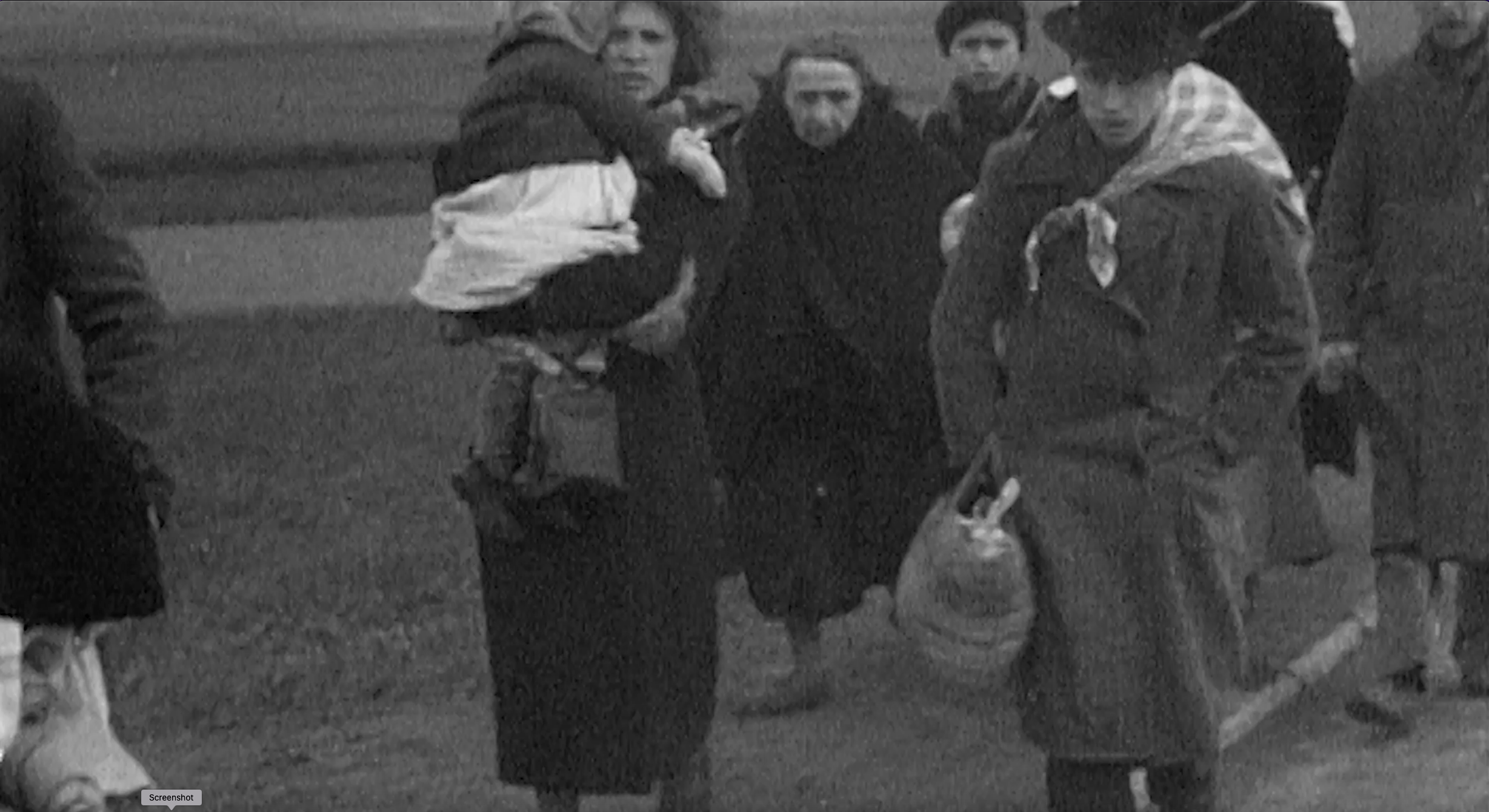
Esther’s mother Adrienne Tischauer, flees Vienna after the Anschluss to Belgium.
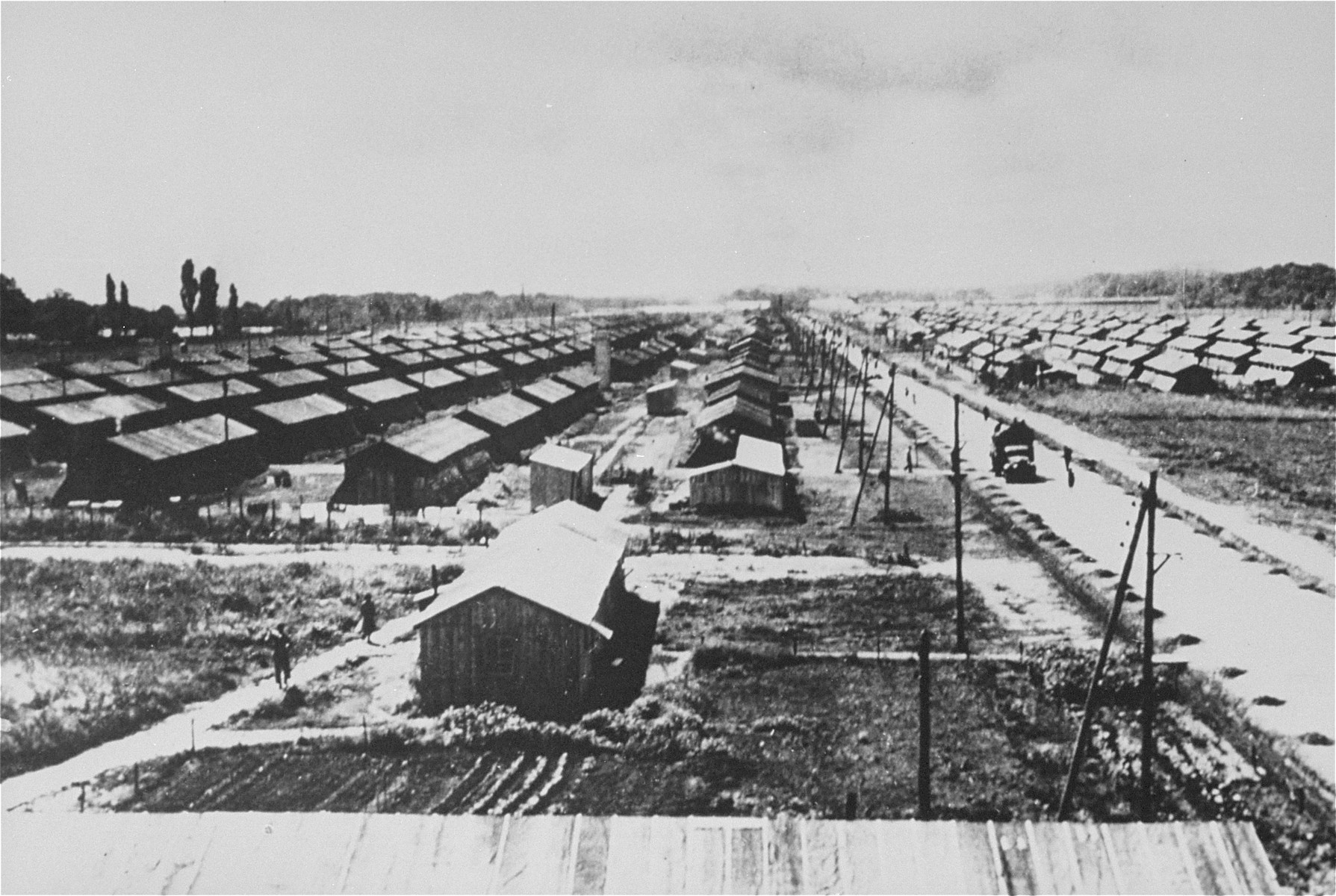
Upon the Germans invading Western Europe, Esther’s mother flees south into Southern France, to be placed in the camp of Gurs. Independently, Wilhelm, her father, is transported to the same camp. The parents meet and eventually are married in a Jewish ceremony.
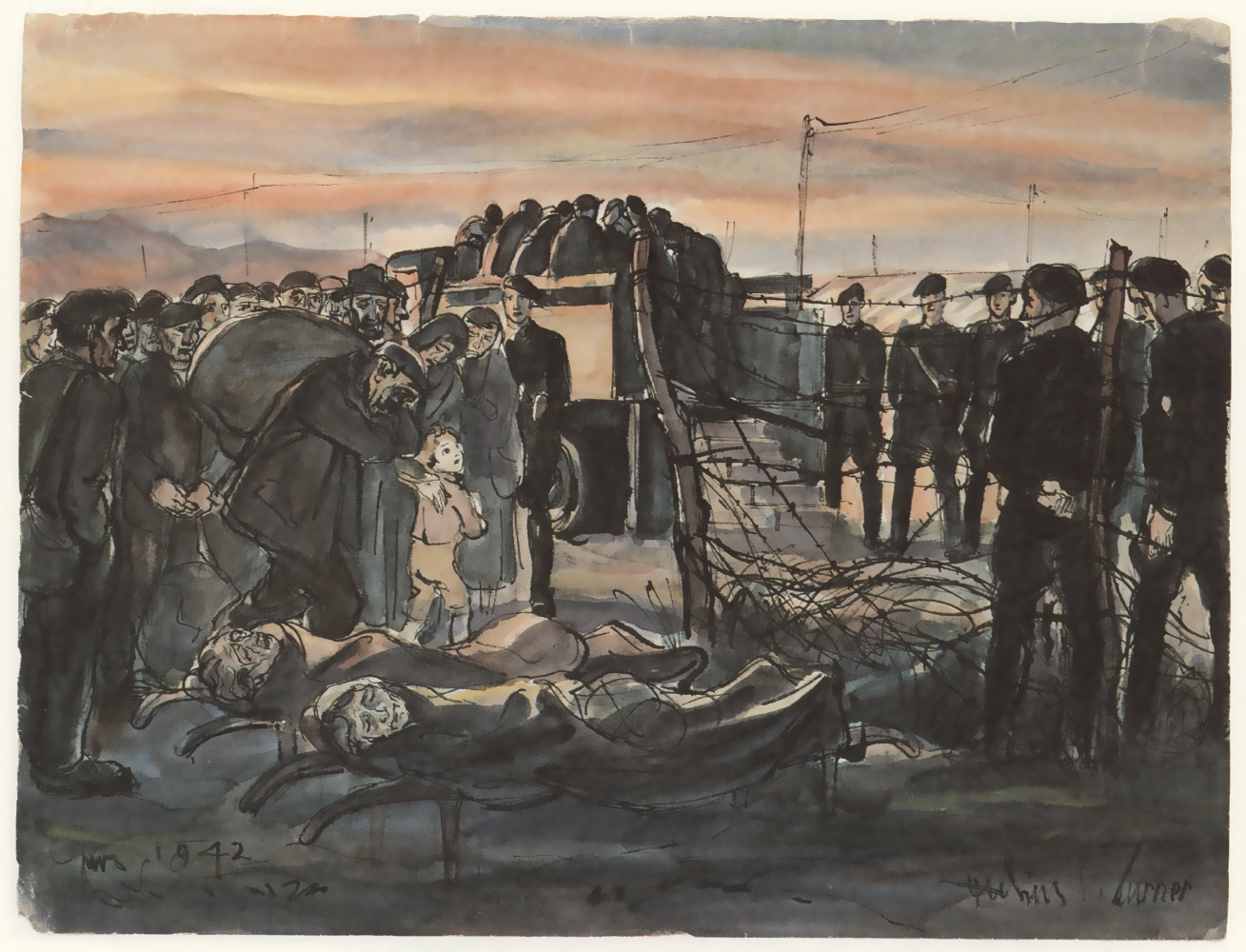
The first and only deportation of Jews into Western Europe occurs when Eichmann orders over 6,000 Jews from western Germany to be sent to Gurs.
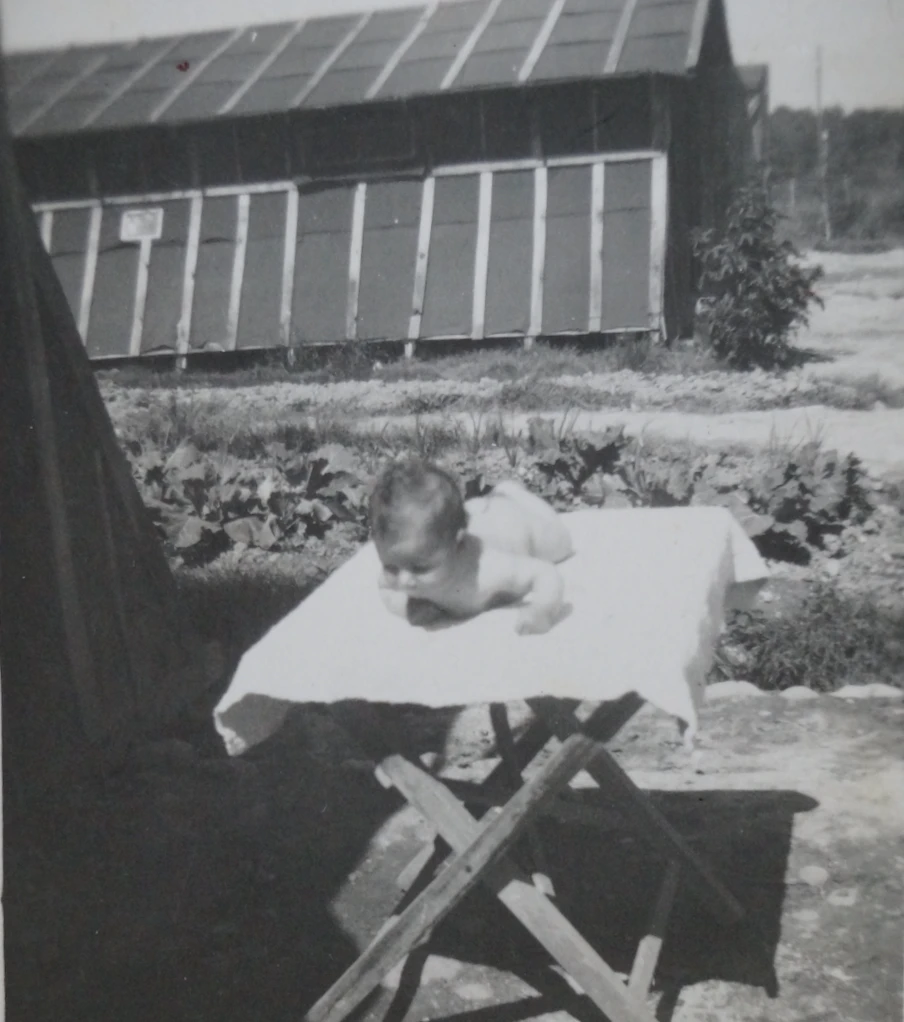
Esther is born at Gurs.
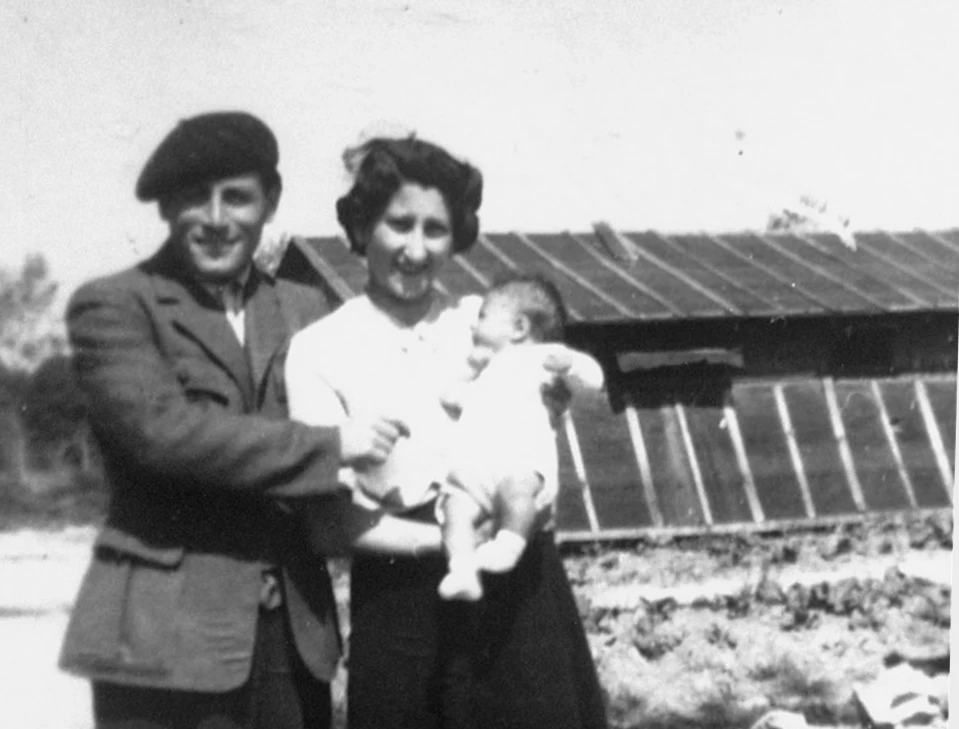
Wilhelm (above-left) escapes Gurs; is sent to a prison camp in Spain.
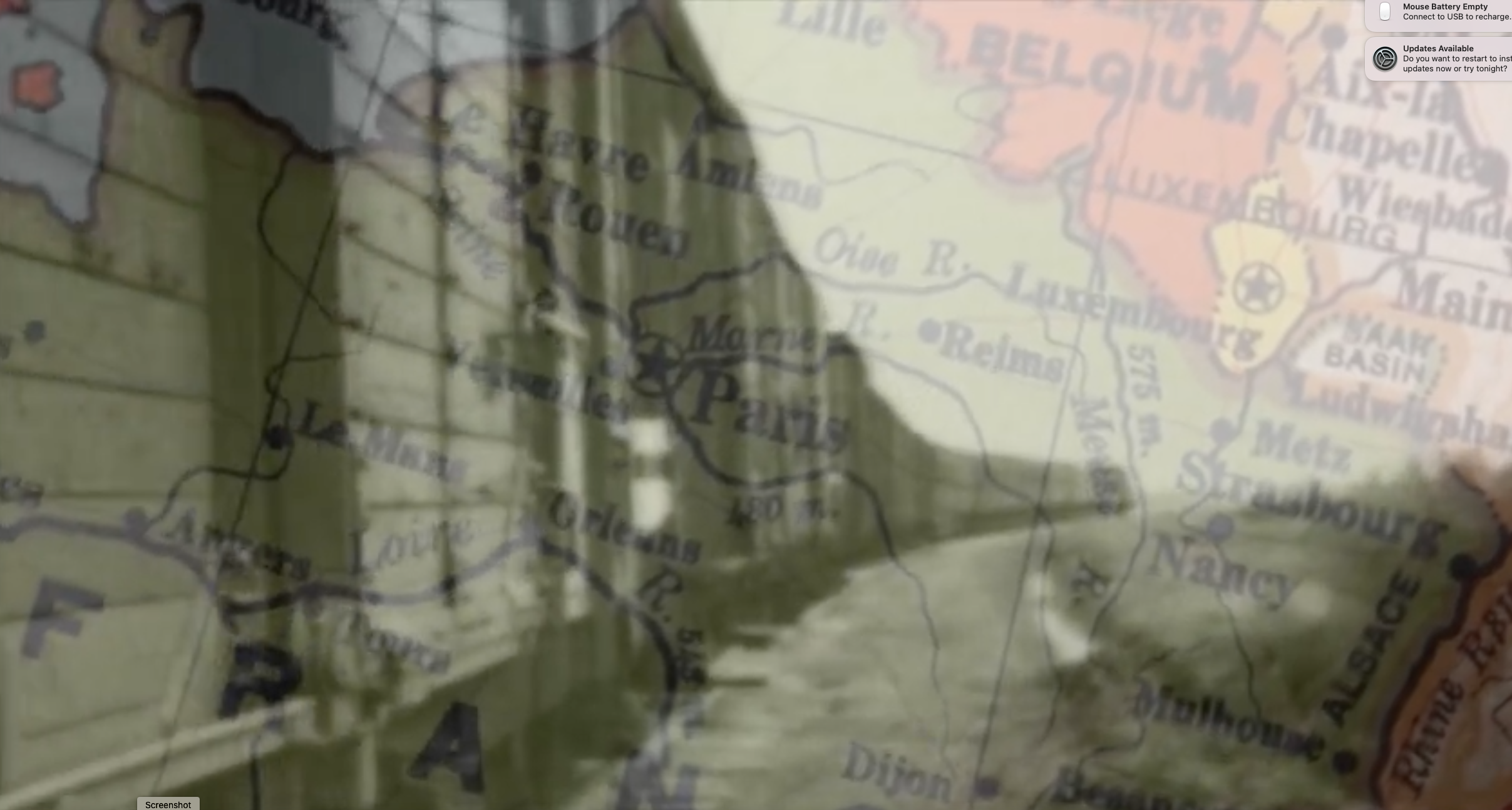
Seven train transports of Jews from Gurs are sent to Auschwitz; Esther and her mother are two of the few who are not deported.
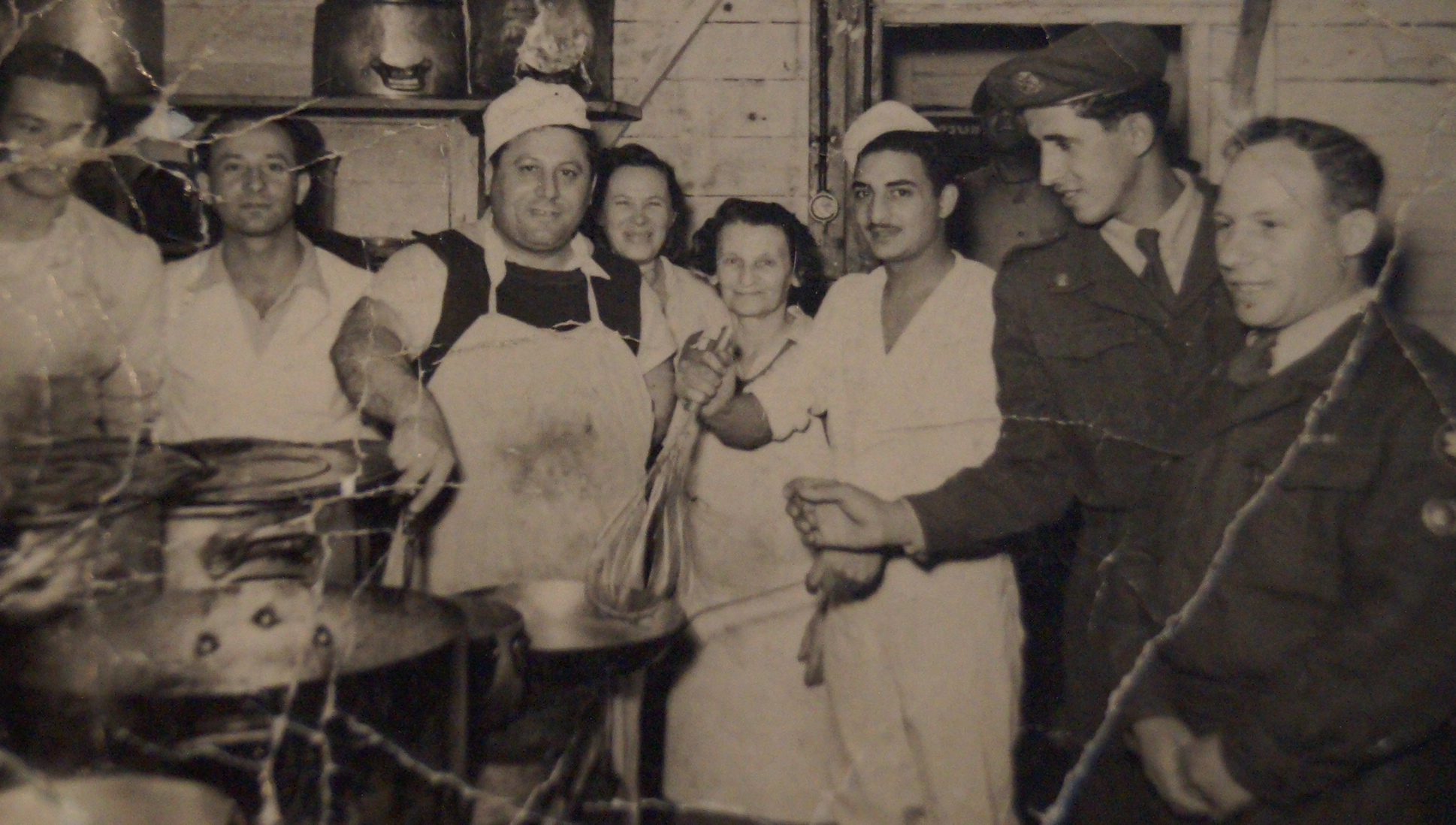
After the liberation of Southern France, Esther and her mother are sent to the relocation center in Serielhac, where they learn that Wilhelm is alive and in Mandatory Palestine. They join him there.
Above: Esther’s father takes a job as a chef. Seen here with co workers and British soldiers.
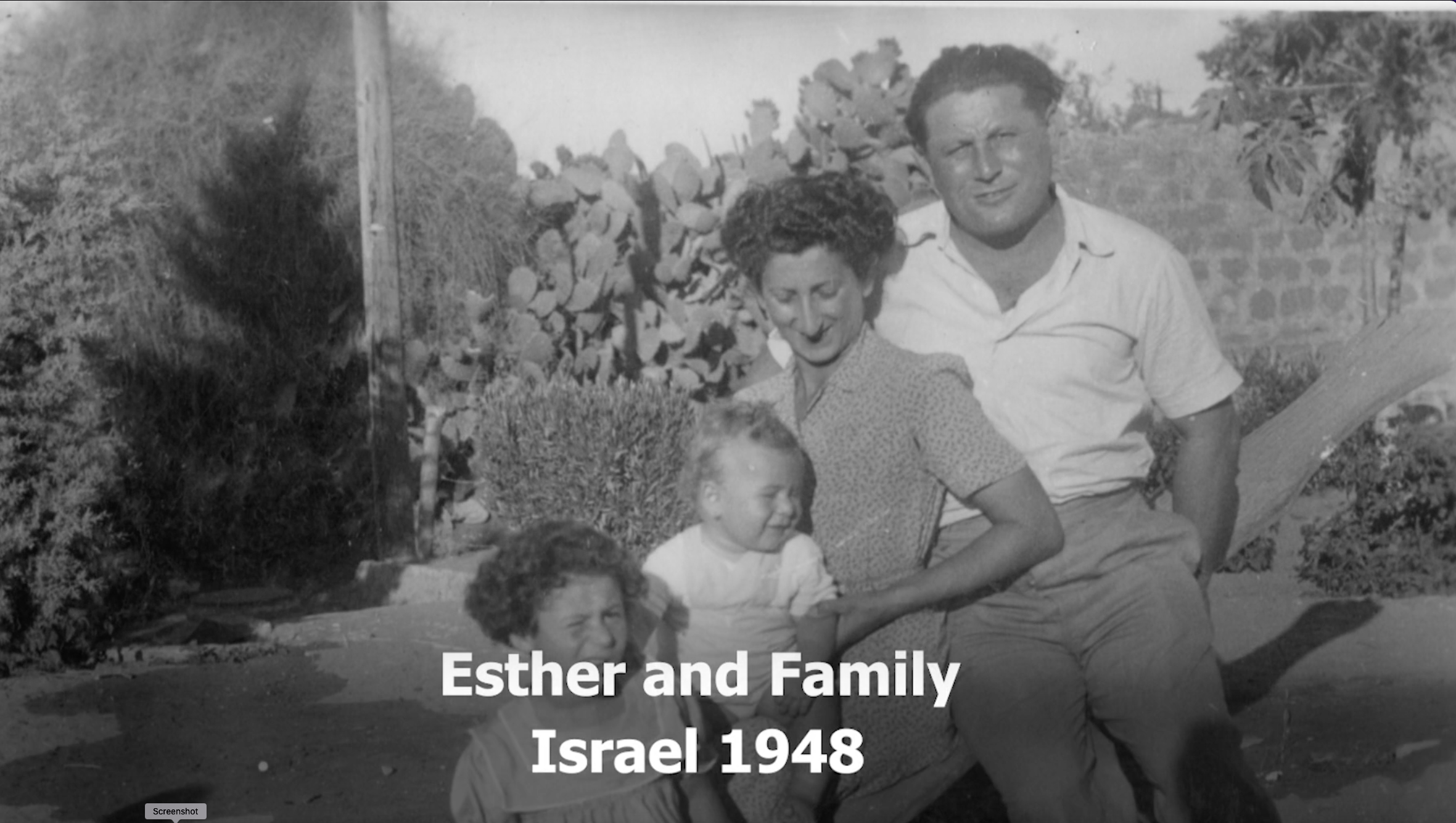
Israel is declared a state.
In the documentary, Esther discusses the dangers experienced by her and her family, the bombings, her father’s service in the Israeli army, and their reunion with the few remaining family members left who had survived the Holocaust.
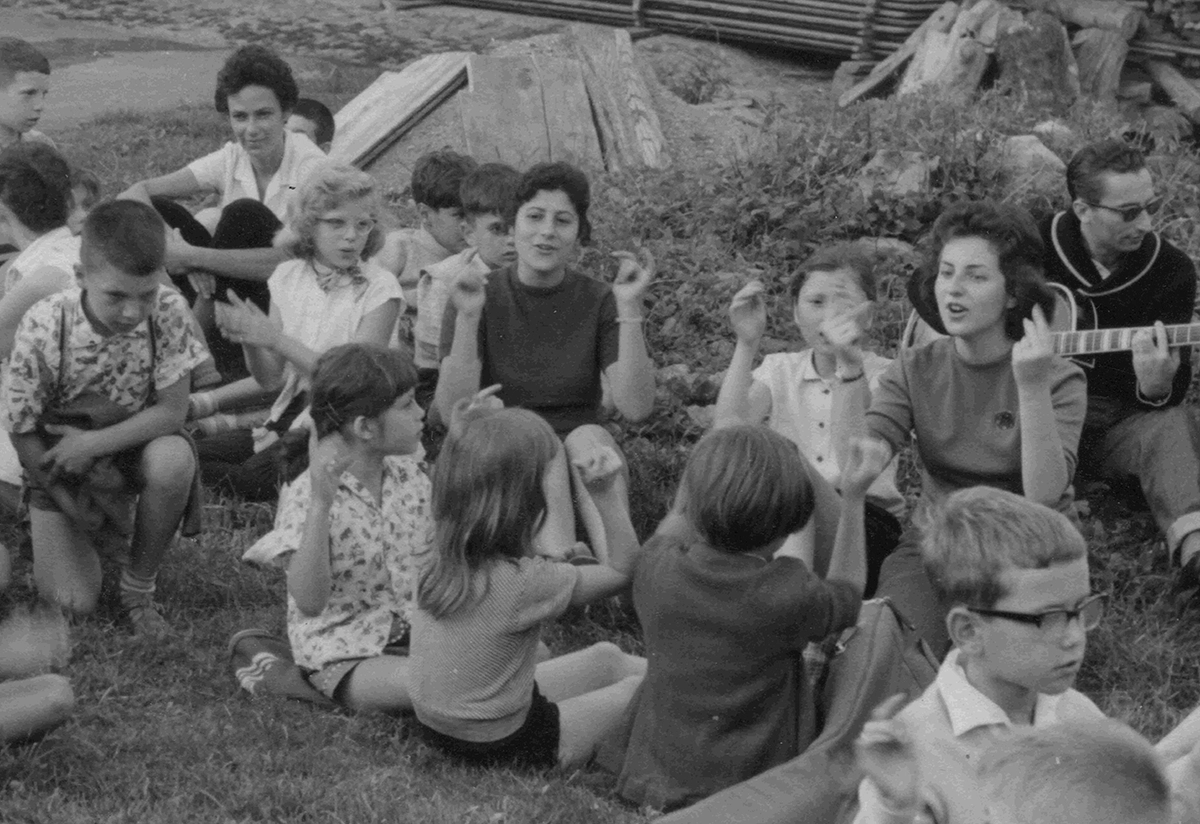
Esther’s parents move to Germany. Esther follows a year later.
Above: Esther (center) as a young instructor in Germany.
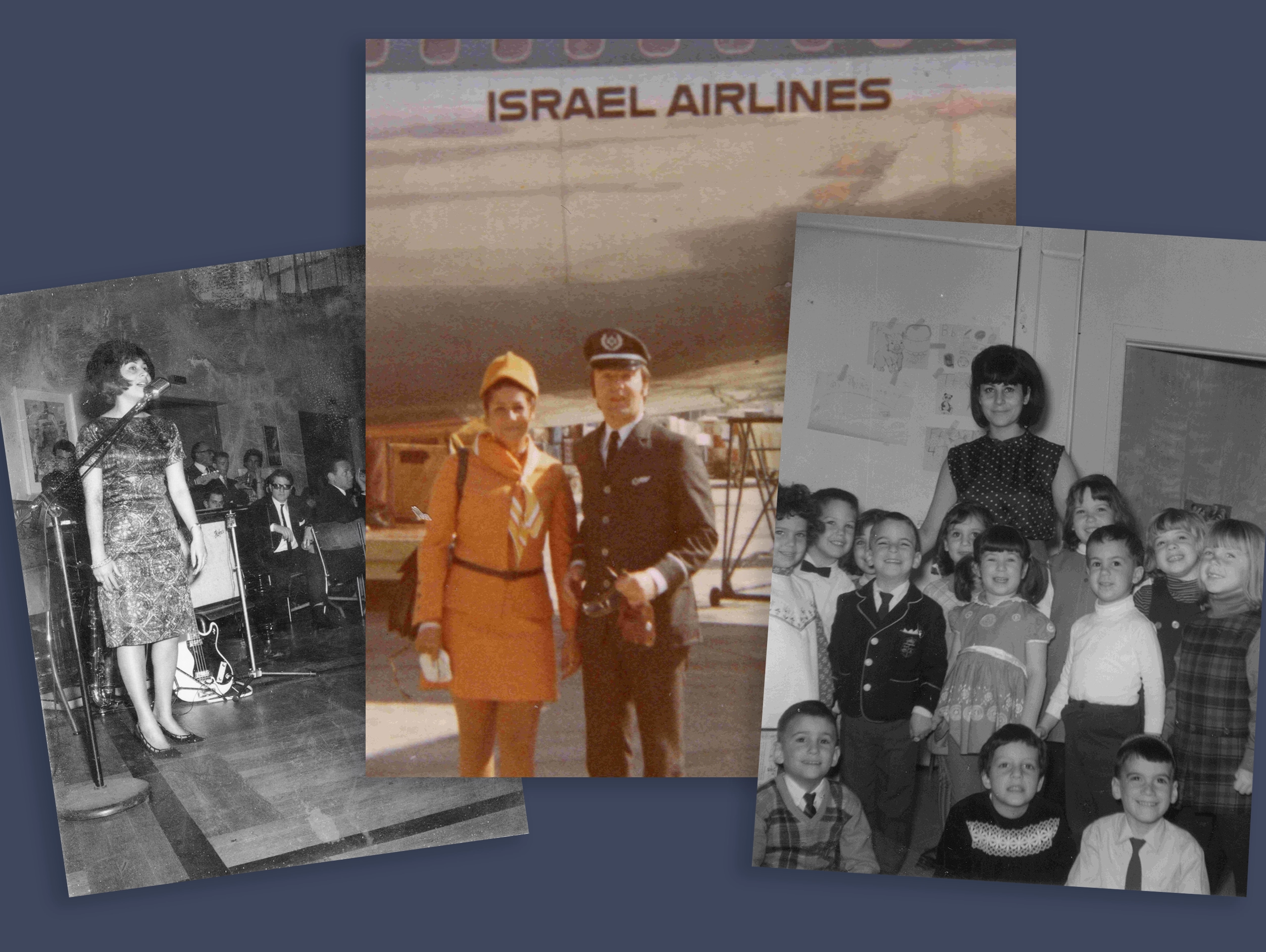
Esther, on her own, has a variety of professions; pre-school teacher, singer in a band, flight attendant for El Al. She then marries and settles in Montréal.
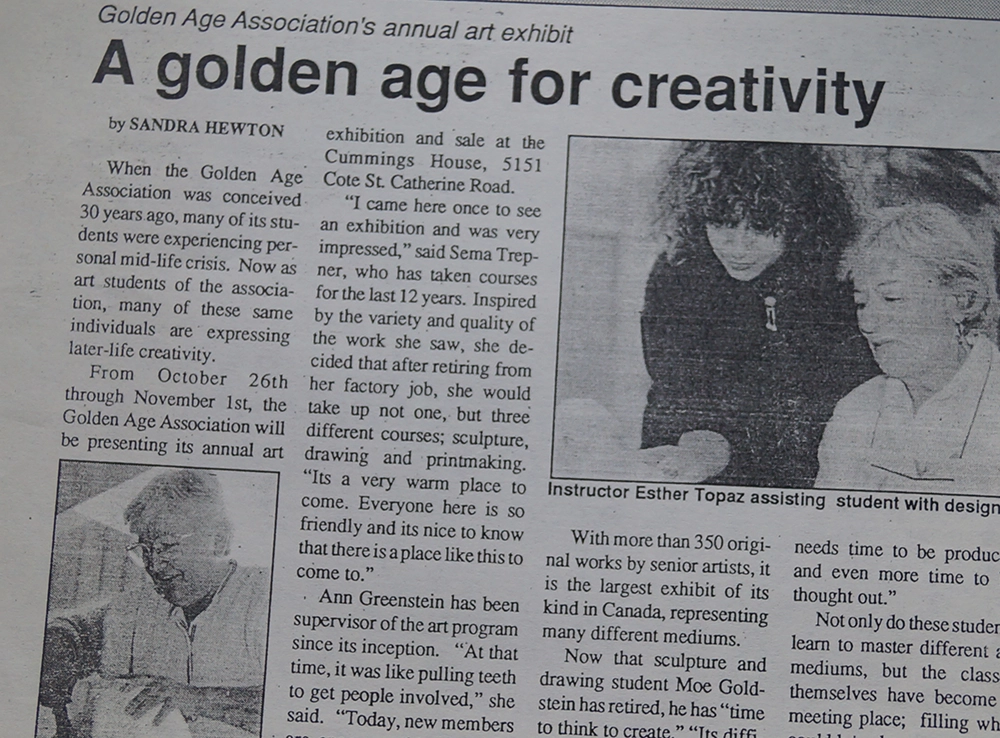
Serendipity leads her to a burning passion for art through sculpture. Esther has two children, is educated at the Saydie Bronfman center for the arts, studies under Stanley Lewis, and develops a solid reputation. Esther becomes an art teacher herself to senior citizens.
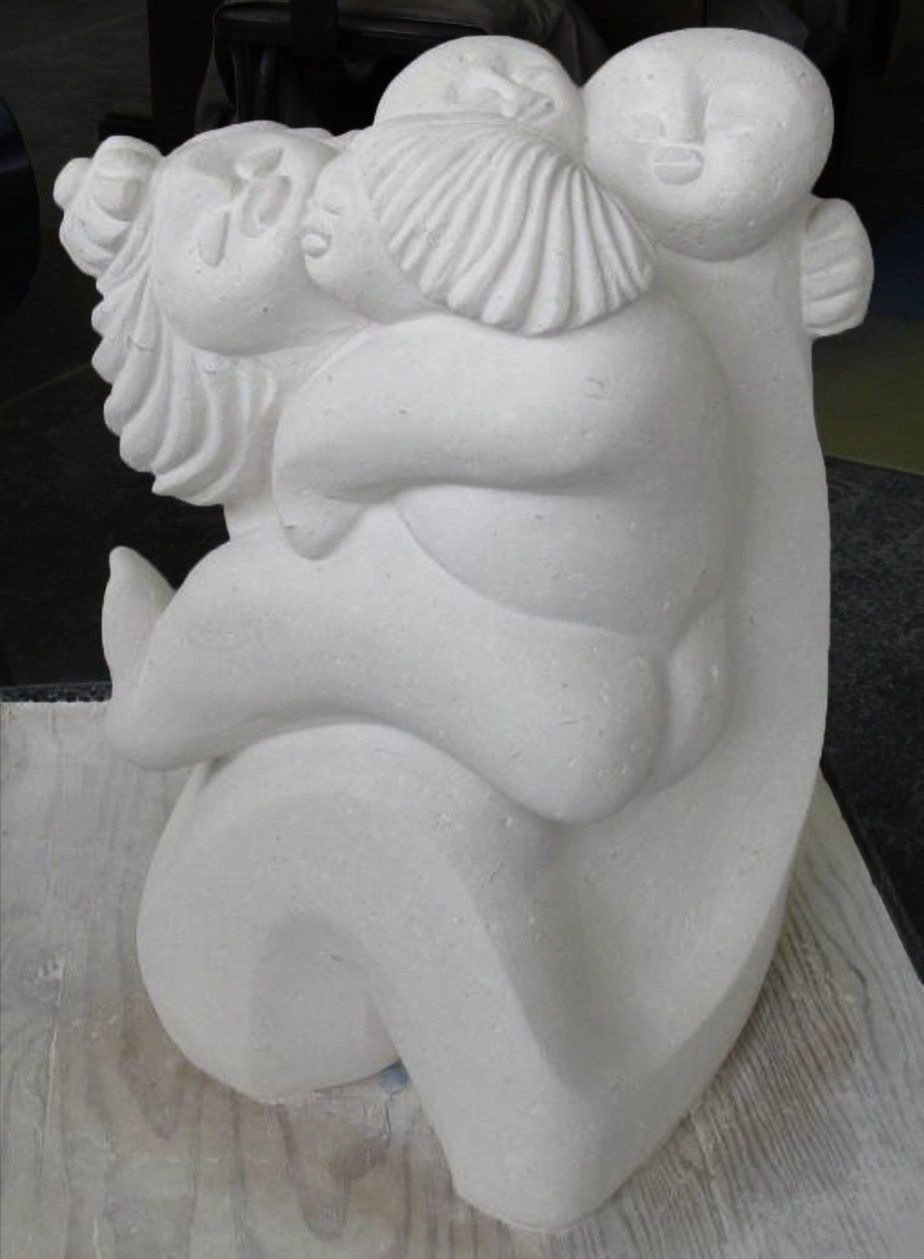
Children and their mothers become a central theme of Esther’s art. Having given birth, Esther suddenly imagines herself in her mother’s situation at the camp, horrified at the thought of what her young mother must have experienced. She looks at herself and sees her mother.
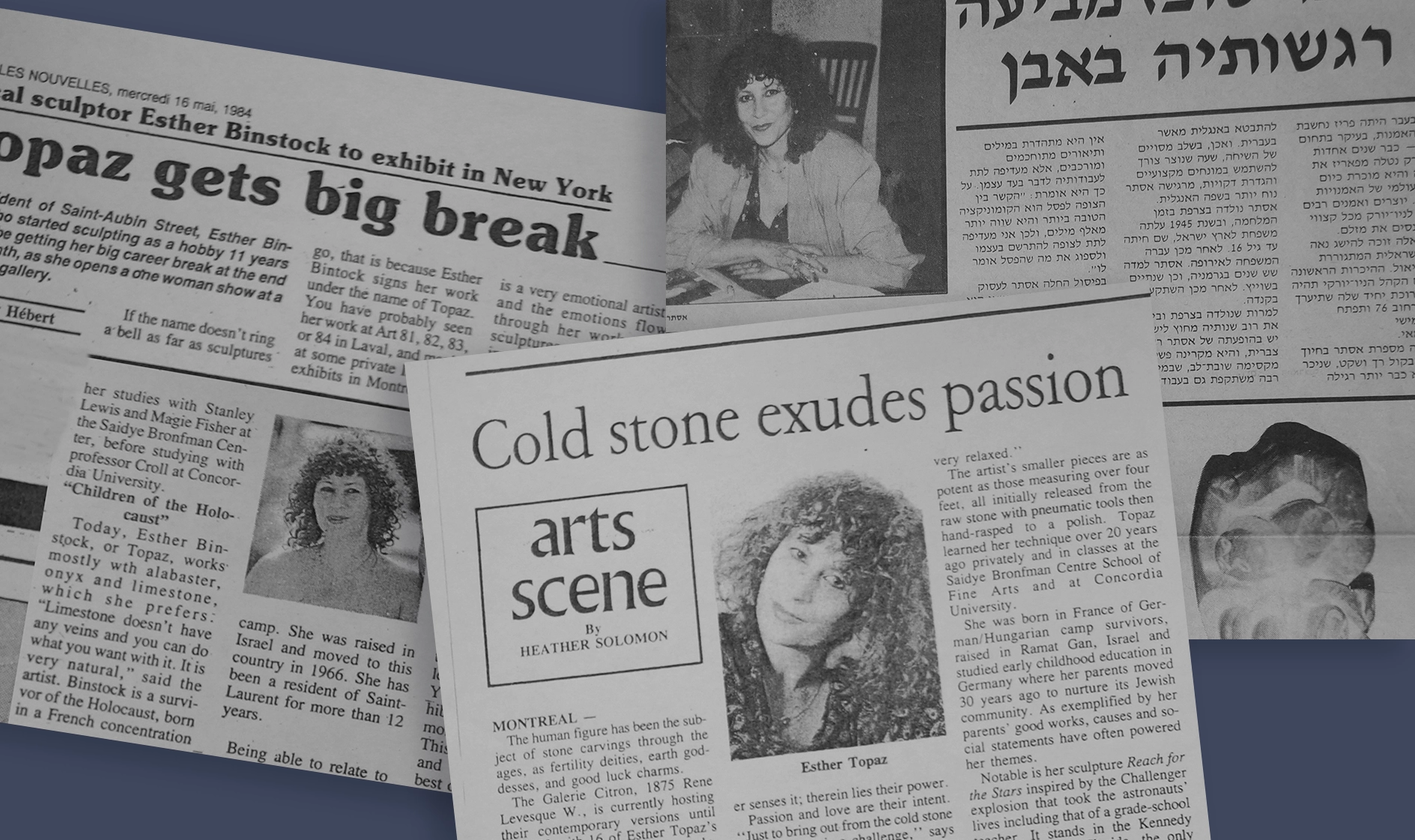
Esther gains international attention for her work as a sculptor.
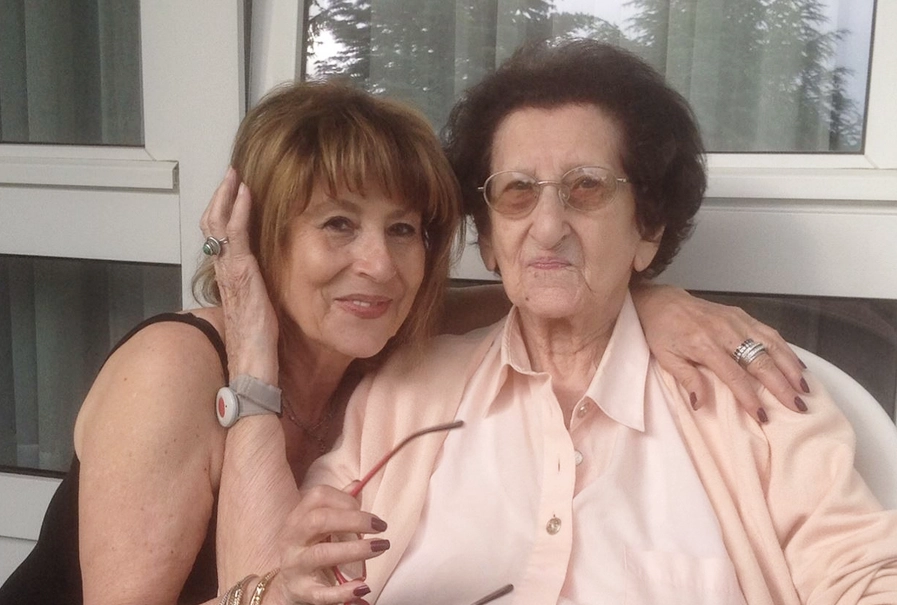
Esther begins an odyssey of self-discovery as she learns, through her life and art, to deal with the generational trauma caused by both her parents’ experiences and her own.
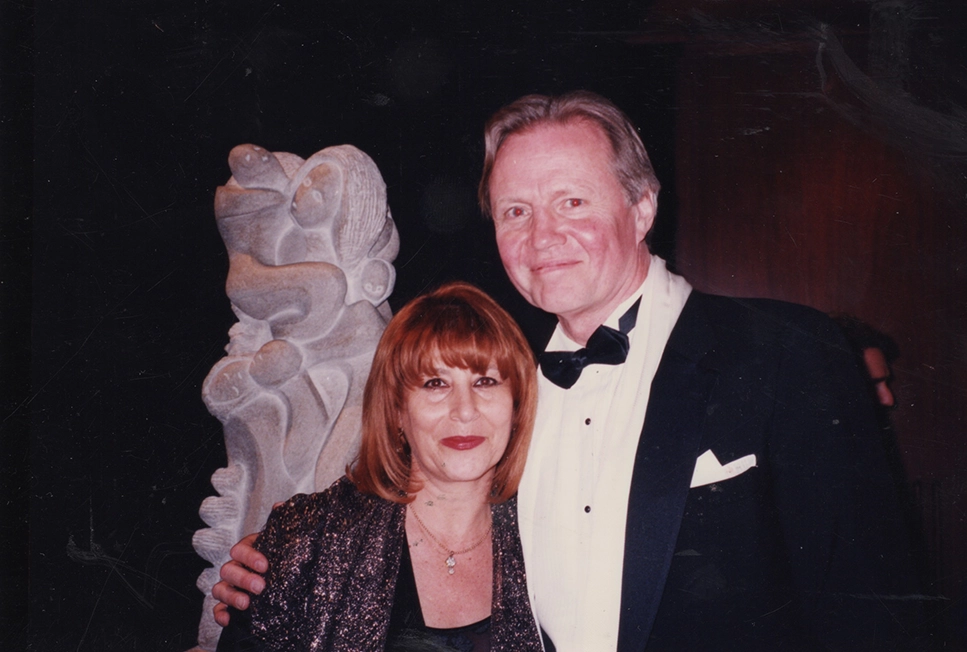
She is involved in charity donations of her work with Steven Spielberg, John Voight, among many others, to raise money for the children of Chernobyl.
Above: Esther with John Voight. Her sculpture in the background.
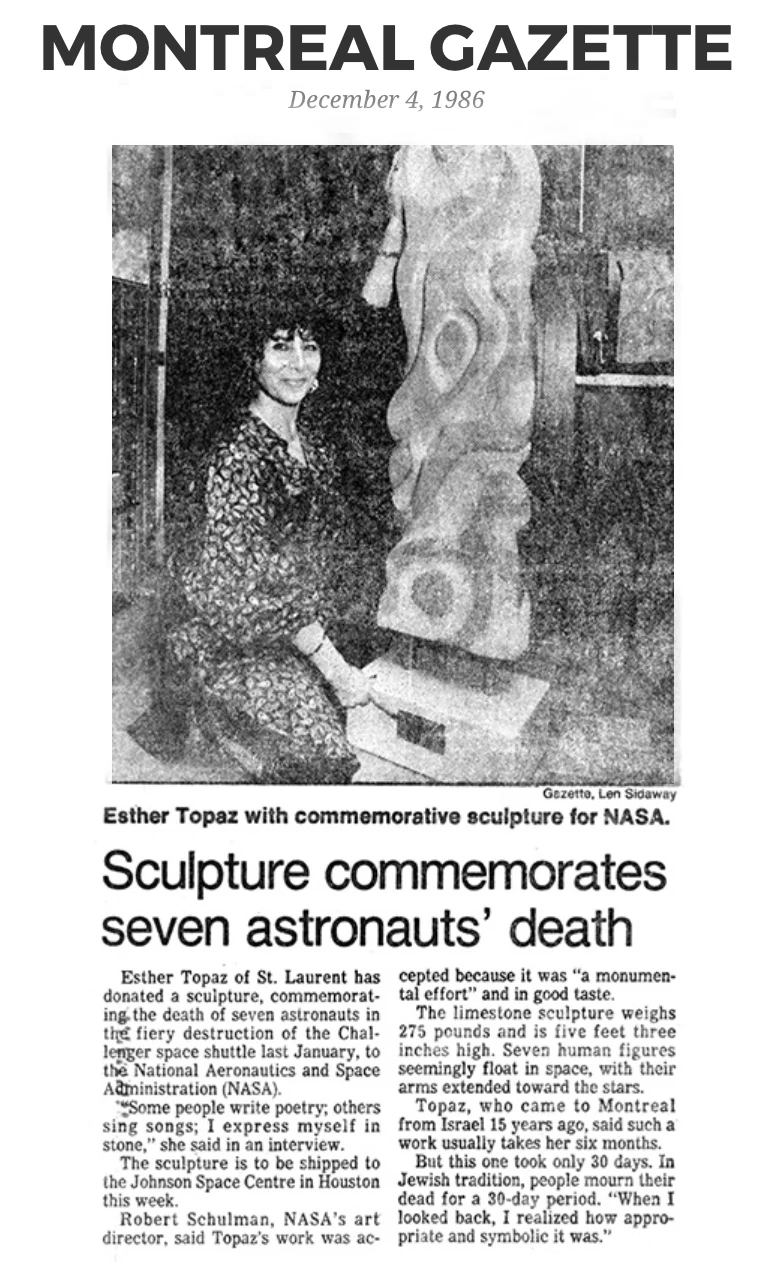
NASA accepts her donation of a sculpture made in commemoration of the Challenger explosion.

Esther’s own awareness of how unique and significant her birth and early childhood was grows after a visit to the US Holocaust Memorial Museum. Thousands of Jews were shipped to their deaths from the very camp she survived. At this moment, Esther realizes that Gurs was not just a terrible place, but part of an invidious system of persecution and death.
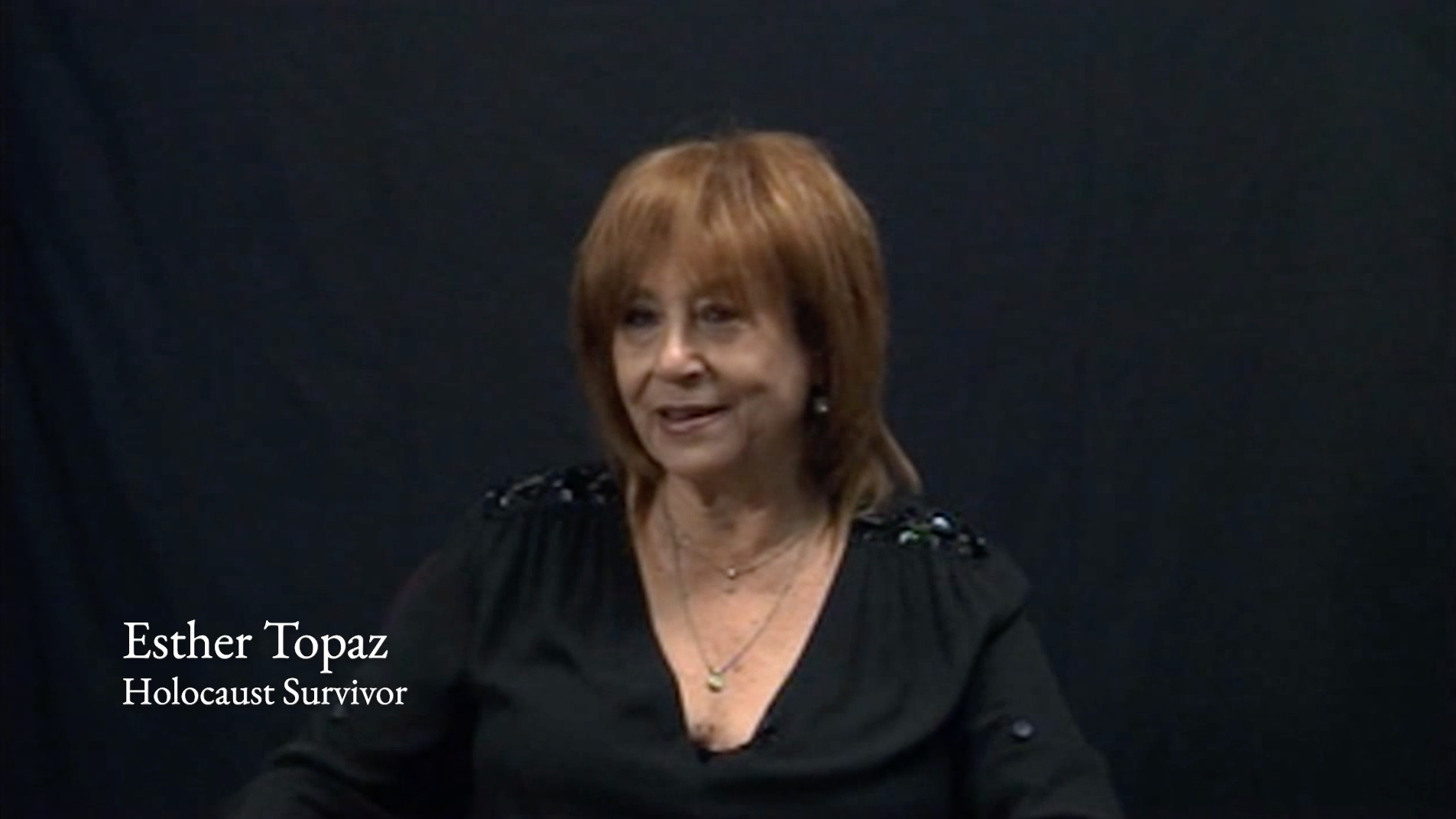
Benaquist and Durnford begin chronicling the life of Esther through interviews and research; decide to make it their ongoing project.
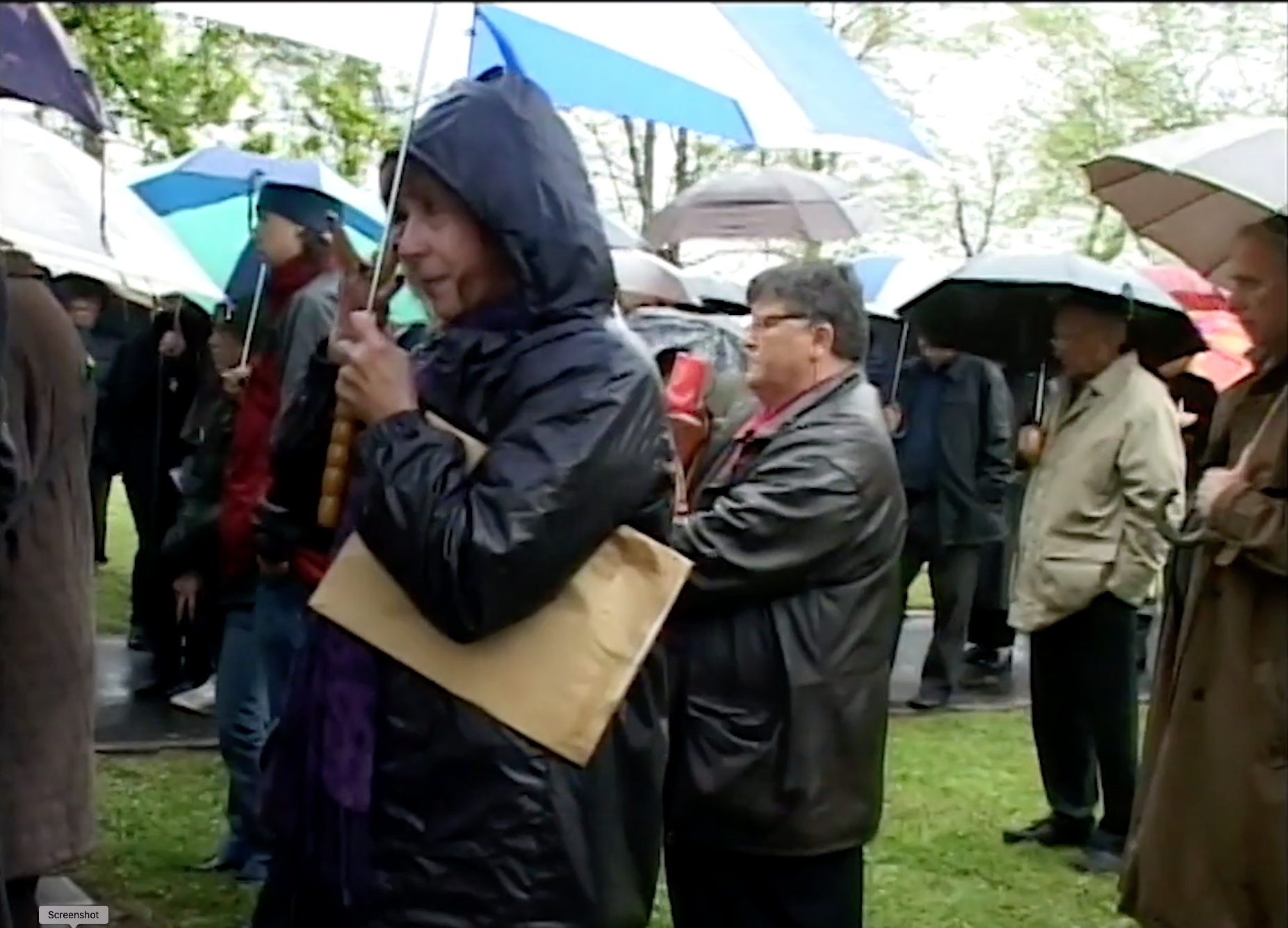
Esther is a guest of honor at the 70th anniversary recognition events surrounding the opening of the camp of Gurs. This was the first time since infancy that she had been in Gurs, her birthplace, and the experience was nearly overwhelming, as she saw and learned of the circumstances under which she and her parents had survived. The filmmakers attend.
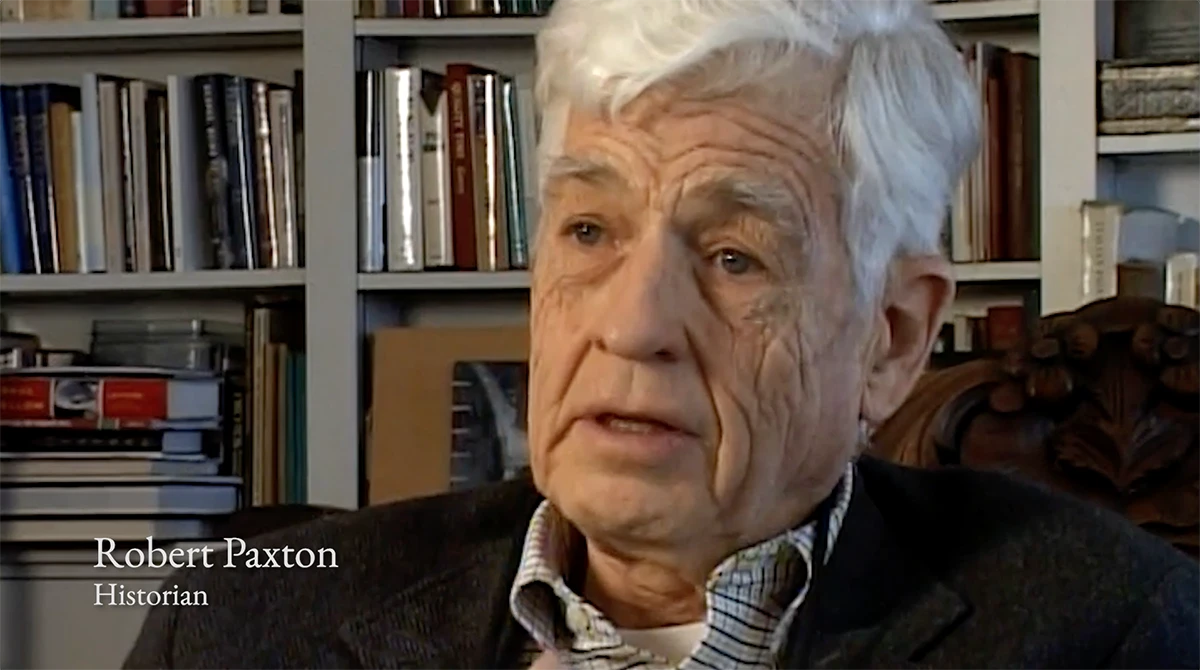
The filmmakers locate and interview the pre-eminent scholars on the subject of Vichy collaboration. They film in Canada, southern France, and the United States. Durnford translates Claude Laharie’s seminal study of the Gurs camp into English.
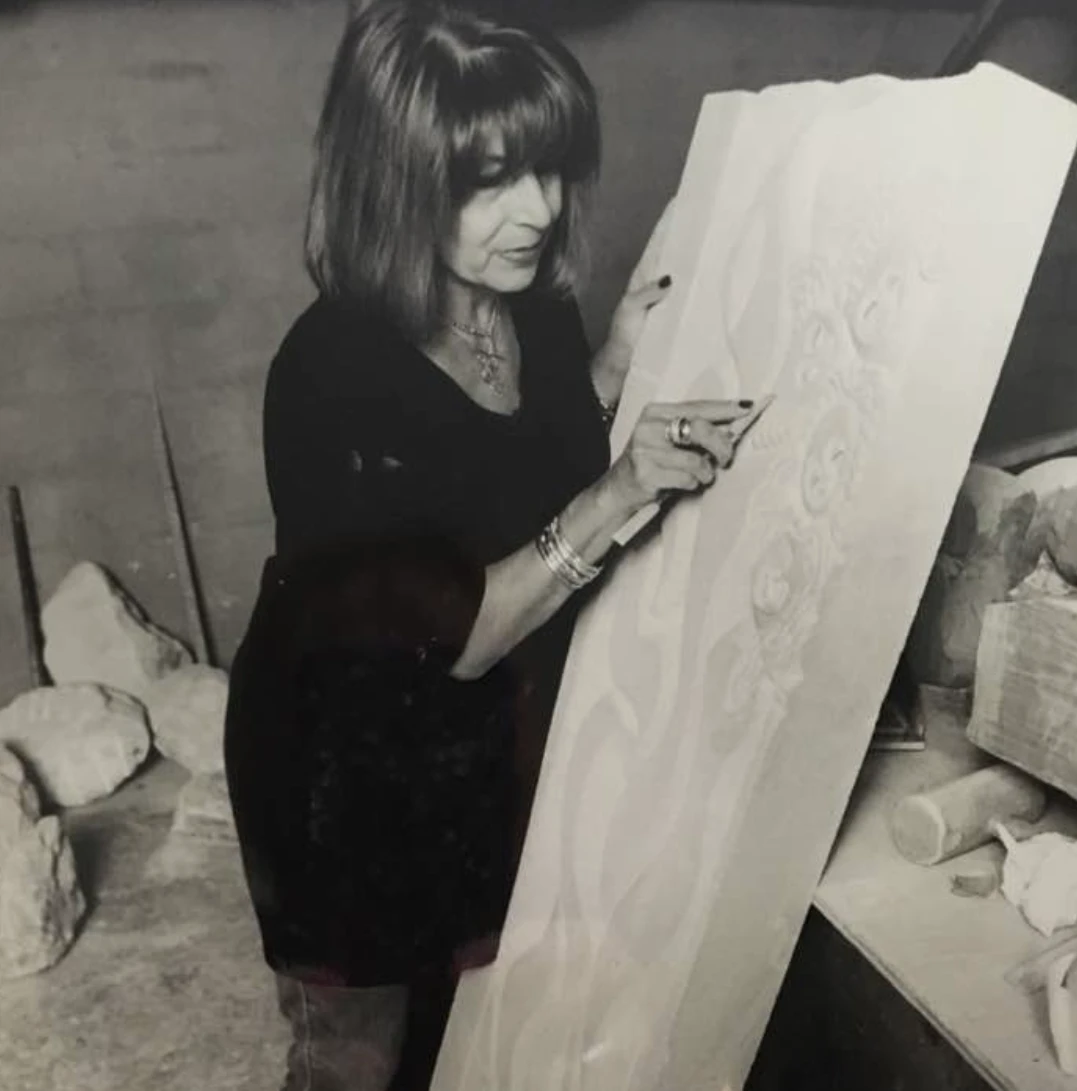
Esther continues to work as a sculptor.
Parents, children, and family, remain central themes of her art, and just as they are central to her life.